A sounder of feral hogs can undo a quarter mile of fence in one night. Not over a season. One night.
If you ranch anywhere in McLennan, Bosque, or Falls County, you already know the drill. You walk your line on a Saturday morning and find net wire peeled up like a sardine can, a tunnel dug under the bottom strand, and hog tracks headed straight for your coastal field. Feral hog fence damage is one of the most common repair calls we run at Brazos Ridge Fence, and it’s getting worse every year. Texas holds somewhere north of 2.5 million wild pigs, and the Brazos and Bosque river bottoms are prime habitat.
The good news: hogs are predictable. Once you understand how they attack a fence, you can build one they’ll quit testing. This article covers why hogs beat most fences, what the damage really costs, the quick fixes that buy you time, and the fencing that actually holds.
Why hogs go through your fence instead of around it
A mature boar can weigh 250 pounds or more, and he carries most of that weight low, right at the height of your bottom wire. Hogs don’t jump. They root, they push, and they shove their snouts under the lowest point they can find and lift.
That’s why a fence that holds cattle just fine does almost nothing against pigs. Cattle push at chest height, where your wire is tight and your posts are strongest. Hogs attack the bottom 12 inches, where most fences are weakest.
Three spots fail first on almost every place we look at:
- Water gaps and creek crossings, where flood debris has already loosened the wire
- Low spots and washes, where the bottom strand sits 6 or 8 inches off the dirt
- Old net wire with rusted bottom stays, which tears the moment a hog gets his nose in it
Hogs also follow routine. They travel the same trails between bedding cover and food, night after night. Once a sounder learns your fence has a hole, they’ll use that hole until you close it, and then they’ll test the fence 20 feet on either side of the patch. Texas Parks and Wildlife has a good rundown of feral hog behavior and legal control options on their nuisance wildlife page if you want the biology behind it.
If you’re finding fresh rooting along your line right now and stock is getting out, don’t wait on it. Call us at (254) 870-8898 and we’ll get eyes on the damage, usually within a day or two. Estimates are free and written.
What feral hog fence damage looks like, and what it costs you
The fence repair is usually the cheap part. It’s everything that follows the hole that hurts.
Dale Kunkel runs about 60 cow-calf pairs on 300 acres outside Crawford, with a half mile of fence along a Middle Bosque creek bottom. Hogs tunneled under his net wire at a water gap in March. Before he found the breach, his cows had pushed through the widened hole and scattered across a county road. He spent $1,850 with us rebuilding 400 feet of bottom wire and the water gap, but he figures the real cost was closer to $4,000 once he counted a vet bill for a cut-up heifer and two lost days rounding up cattle. Loose cattle on a road are also a liability problem, which we’ve covered before in our post on cattle getting out of the fence.
Out in China Spring, Marisol Vega leases 80 acres for coastal hay. A sounder of about 15 hogs rooted up close to 4 acres of her best field in two weeks, coming in through a gap they’d opened under a sagging corner. Her hay loss alone ran about $3,200 at last summer’s bale prices, on top of $900 to disk and re-sprig the rooted ground. The fence fix that would have kept them out cost less than either number.
USDA puts feral swine damage nationwide at over $2.5 billion a year in agricultural losses, and their feral swine damage program exists because the problem keeps growing. Here in Central Texas, the pattern we see on repair calls is consistent: the landowner patches the hole, the hogs open a new one, and the patching bill quietly passes what a proper hog-resistant stretch of fence would have cost in the first place.
Quick fixes that slow hog damage to your fence
You can’t hog-proof a whole ranch overnight, and you don’t need to. Most places only get hit along one or two stretches, usually the side facing water or heavy brush. Here’s what buys you time on those stretches.
Drop a barbed strand at ground level. If you’re running 5-strand barbed wire, adding one tight strand at 2 to 3 inches off the dirt makes rooting under a lot less comfortable. It won’t stop a determined boar, but it turns away casual pressure. While you’re at it, fix any slack in the existing strands, because loose wire is an open invitation. Our guide on fixing sagging barbed wire walks through re-tensioning step by step.
Stake down your low spots. Anywhere the bottom wire sits more than 4 inches off the ground, drive a t-post or rebar stake and tie the wire down to it. Cheap, fast, effective.
Add a hot wire at snout height. A single electric offset wire at 8 to 10 inches, run off a good low-impedance charger, is the best dollar-for-dollar hog deterrent there is. Hogs test with their nose, and their nose is wet. One solid hit and most of them remember. Keep it clear of grass, or it’ll short out and train them the wrong way.
Rebuild your water gaps first. Nine times out of ten, the hogs’ front door is a water gap. A properly built swinging water gap closes the hole after every rise instead of leaving it open. We wrote up how these work in our water gap fence guide.
One honest warning. Patching torn net wire by lacing in scrap pieces is fine for a week, not for a year. Every splice is a weak point, and hogs find weak points for a living. If a stretch has more patches than original wire, it’s past saving.
Fencing that actually stops feral hogs
When you’re ready to stop patching, here’s what holds pigs, roughly in order of how often we build it.
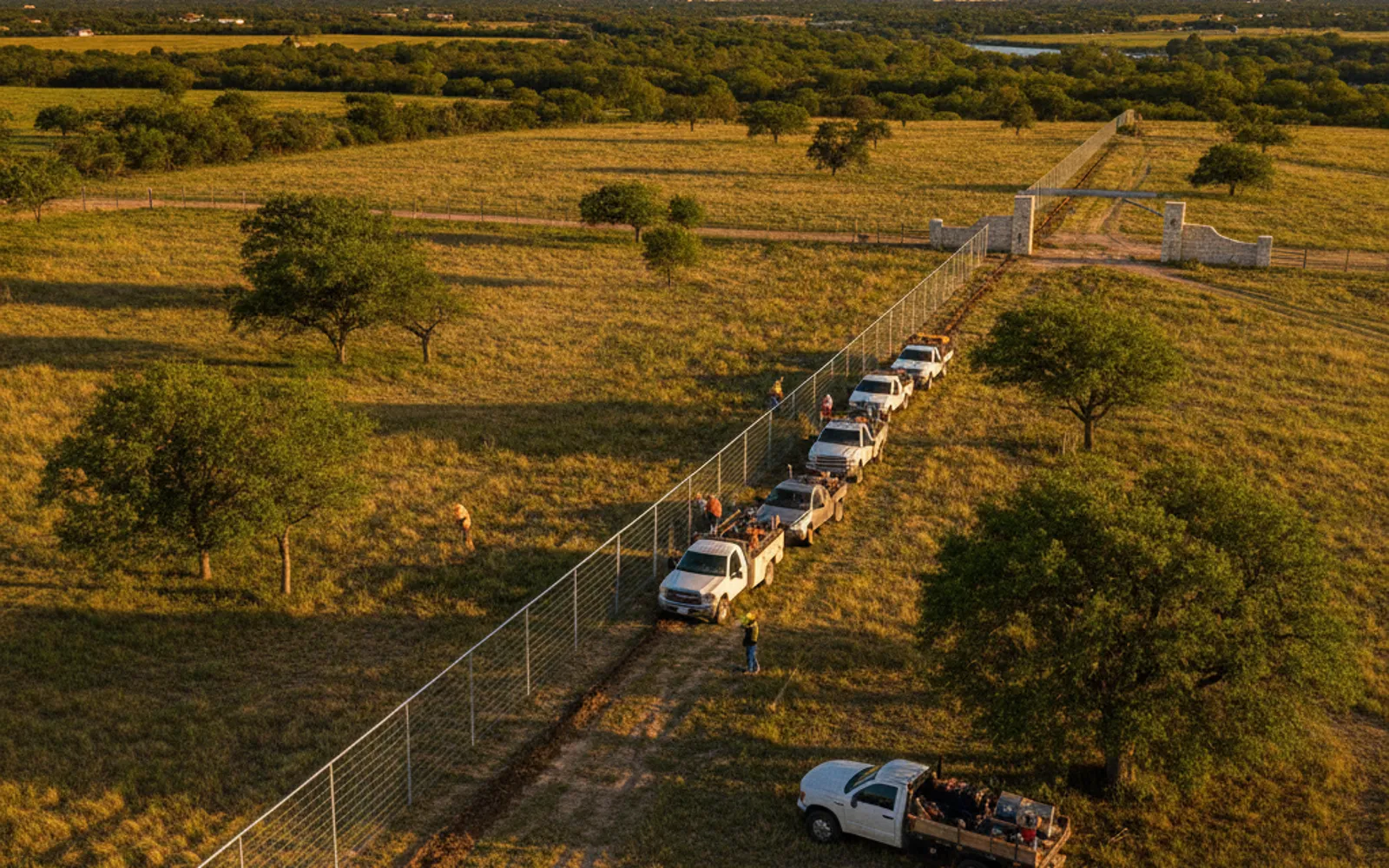
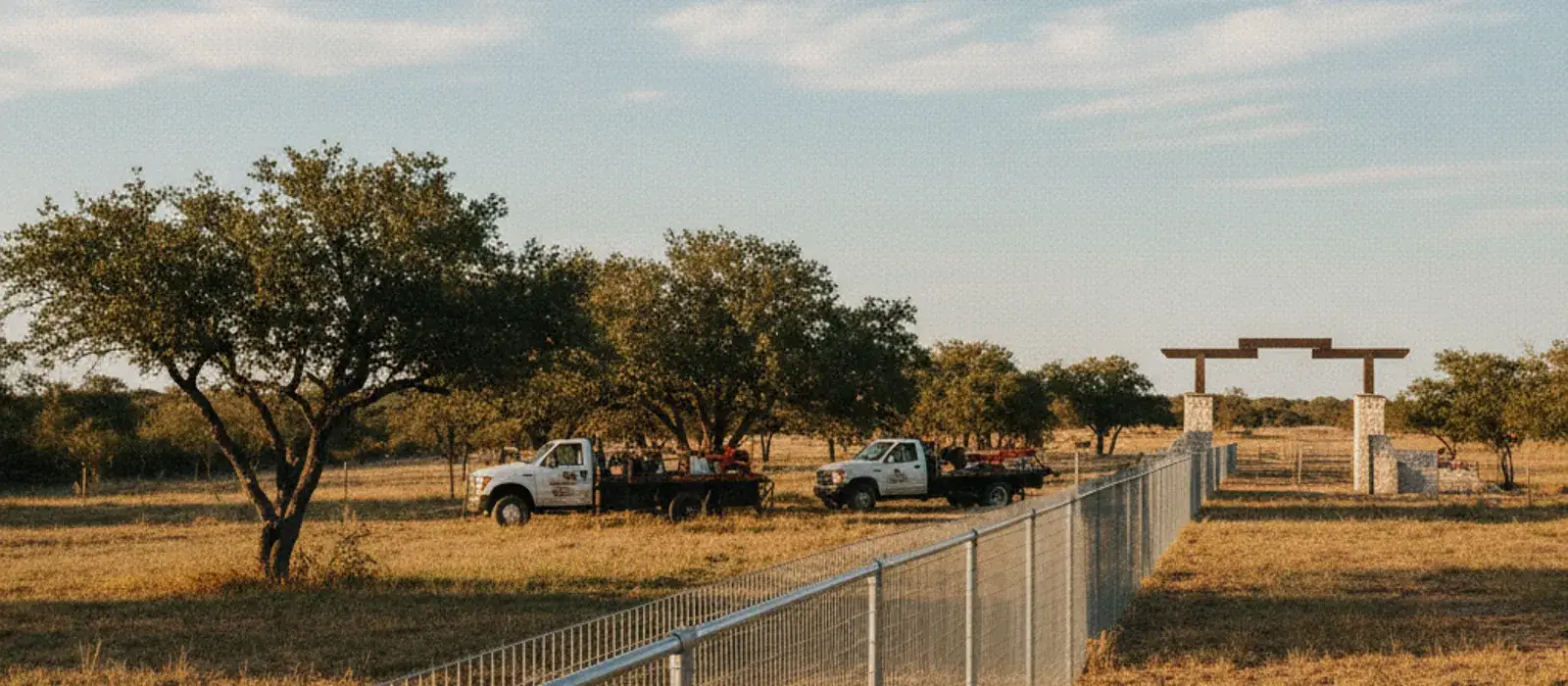
Fixed knot net wire, hog height. This is our workhorse hog fence. A 48-inch fixed knot fence with a barbed strand at ground level and posts on 8-foot spacing will turn nearly all hog traffic. Fixed knot matters because the knot won’t slip when a hog pushes into it, unlike the hinge joint field fence on most older places. We broke down the difference in fixed knot vs hinge joint, and it’s the single biggest upgrade you can make.
Net wire plus hot offset. Same fence, plus an electric wire at snout height on the pasture side or the outside, depending on where the pressure comes from. This combination is what we recommend along river bottoms where hog pressure never really stops.
Hog panels for small, high-value areas. Around pens, gardens, feed storage, and trap sites, 34-inch heavy galvanized hog panels clipped to t-posts are nearly bulletproof. Too expensive per foot for long runs, perfect for the 200 feet that matter most.
Game fence. If you’re already considering high fence for deer management, a properly built game fence with an apron or buried bottom edge handles hogs as part of the deal. See our game fence installation page for how we build those.
Whatever wire you pick, the bottom of the fence decides whether it works. Tight bottom wire, short post spacing on hog trails, and solid H-braces at the corners. A hog fence with a floppy bottom is just a regular fence that cost more.
What hog-resistant fencing costs in Central Texas
Here’s what we’re quoting in the Waco area as of mid-2026. These are installed prices for typical terrain, and your ground, brush, and old fence removal can move them.
| Fence type | Installed cost per foot | Stops hogs? | Best use |
|---|---|---|---|
| 5-strand barbed wire | $2.50 to $4.00 | No, slows them at best | Cattle on low hog pressure land |
| Barbed wire + ground strand + hot wire | $3.50 to $5.50 | Moderate | Upgrading existing barbed lines |
| Hinge joint net wire | $3.00 to $5.00 | Poorly, tears under pressure | Sheep and goats, light pressure |
| 48” fixed knot + barbed ground strand | $4.50 to $6.50 | Yes, best all-around | Perimeters, creek bottoms |
| Fixed knot + electric offset | $5.25 to $7.50 | Yes, highest deterrence | Heavy pressure river bottoms |
| Heavy hog panels on t-posts | $7.00 to $9.00 | Yes | Pens, gardens, short runs |
For a quick gut check on a bigger project, a half mile of fixed knot hog fence lands somewhere around $12,000 to $17,000 installed. That sounds like real money until you stack it against a few years of rooted hay fields, patch labor, and cattle on the highway. If you want exact numbers for your place, our barbed wire fence page covers strand options and pricing, and you can request a free written estimate with your acreage and we’ll walk the line with you.
When to stop patching and call a pro
Plenty of hog fixes are honest DIY work. Staking down low spots, tightening strands, and running a hot wire are all Saturday jobs if you’re handy.
Call in help when you hit any of these:
- The damage runs longer than about 100 feet, or keeps reopening in the same stretch
- Water gaps are involved, since a bad water gap rebuild washes out on the first rise and takes your fence with it
- Corners and H-braces are leaning, because re-tensioning wire on a failing brace makes the lean worse
- You’re splicing old rusted net wire, which usually snaps somewhere new every time you pull tension
- Livestock are actively getting out, and every night the hole stays open costs you more
There’s also a safety piece. Feral hogs can be aggressive, especially sows with piglets, and stretching wire alone in thick river bottom brush where hogs are bedded is a good way to have a bad afternoon. Wear gloves, watch your footing, and don’t work a heavy hog trail alone at dusk.
Marcus Teel, who runs goats on 40 acres near Valley Mills, patched the same creek-side stretch of hinge joint fence six times in one year. He kept receipts: about $640 in wire, clips, and posts, plus most of a weekend each time, and the hogs still opened it back up before Thanksgiving. We rebuilt that 500-foot stretch in fixed knot with a hot offset for $2,900 last December. As of July, it hasn’t been breached once.
If you’re at that point, we’d rather look at it now than after the next breach. Brazos Ridge Fence is licensed and insured, we serve Waco and all of McLennan, Bosque, and Falls counties, and we keep a 24/7 emergency line for cattle-out situations. Call (254) 870-8898 any time, or send us the details and we’ll get you a free written estimate.
Frequently Asked Questions
Will an electric fence alone stop feral hogs?
A hot wire at snout height turns away most hogs, and it’s the cheapest effective deterrent per foot. But electricity alone has failure modes: grass shorts, charger problems, and storm outages, and hogs test constantly. We recommend hot wire as an addition to a physical hog fence, not a replacement for one, especially along river bottoms with steady pressure.
How tall does a hog fence need to be?
Height isn’t the issue, the bottom is. Feral hogs rarely jump anything over about 30 inches, so a standard 48-inch net wire fence is plenty tall. What matters is a tight bottom wire within 2 to 3 inches of the ground, fixed knot construction that won’t slip, and staked-down low spots so nothing can root underneath.
Can I shoot or trap the hogs instead of upgrading my fence?
You can, and in Texas no hunting license is needed to take feral hogs on private land with landowner permission. The catch is that trapping and shooting knock the population back but never to zero, and new sounders move in from the river bottoms within months. Most landowners we work with do both: control the hogs they can, and build fence that handles the ones they can’t.
How fast can hogs damage a fence?
Fast. A sounder of 10 to 20 hogs can open multiple holes in a single night and root up an acre of pasture in a few days. That’s why we tell folks to walk their creek-side fence lines weekly during spring and fall, when hog movement peaks, and to close any breach within a day or two before the whole sounder learns the route.