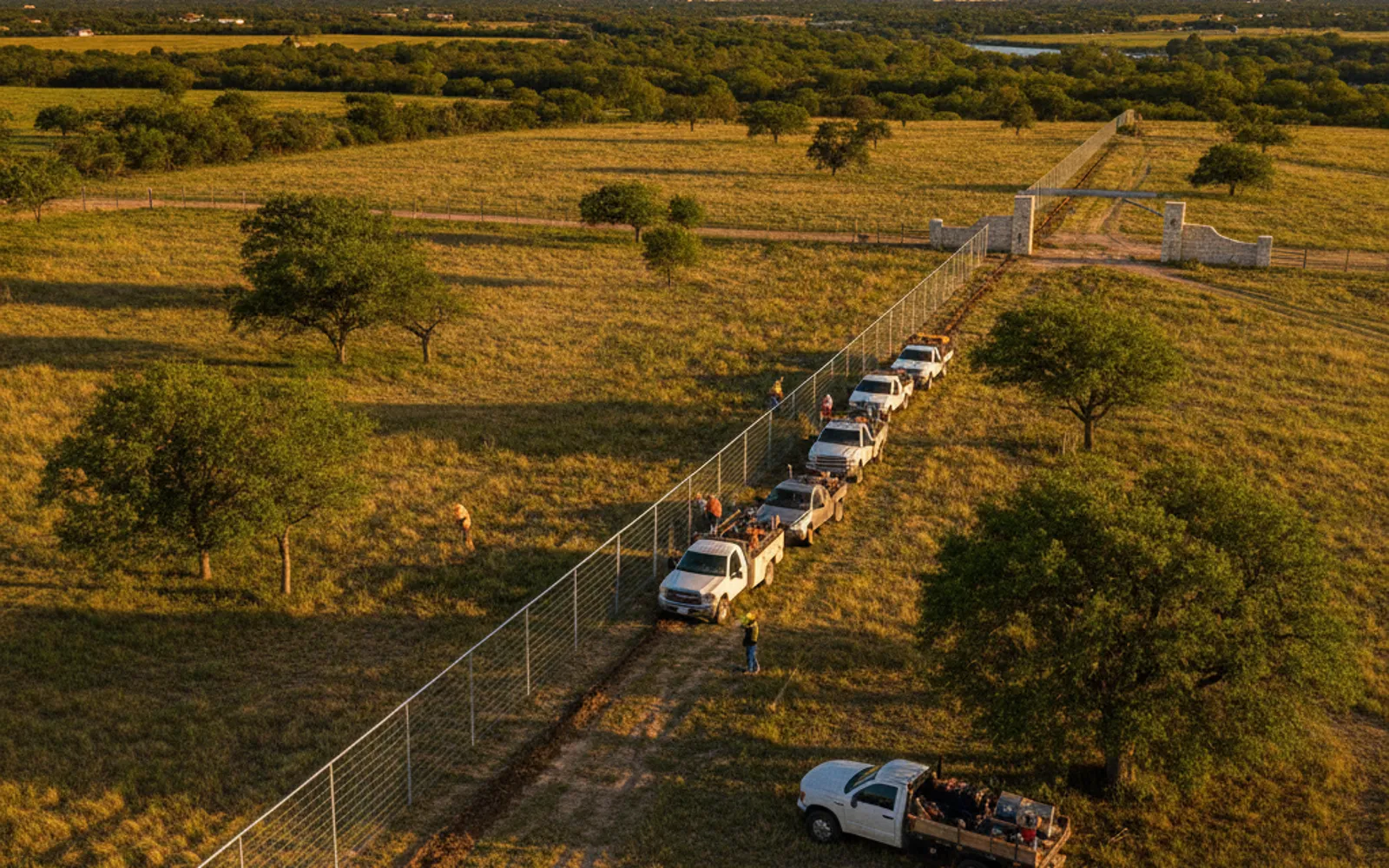
Cedar, mesquite, and brush cleared into a lane you can build a fence in and walk later. Sold as part of a fence job or entirely on its own.
Half the fence jobs we bid in Bosque County are really clearing jobs with a fence at the end. Brazos Ridge Fence Co. clears fence lines across McLennan, Bosque, and Falls counties, cutting cedar, mesquite, and brush into a working lane. Most clearing runs $1 to $3 per foot (roughly $5,300 to $15,800 a mile), and heavy cedar brakes can run past that.
You do not have to buy a fence to get it. Plenty of the clearing we do is on lines that already have good wire on them, where twenty years of regrowth has swallowed the fence and nobody can walk it, let alone fix it. That is its own service and it is priced on its own.
Wide enough for the crew to stretch wire properly and for you to get a truck or a side-by-side down it afterward. A fence you cannot reach is a fence you will not maintain.
The dominant problem west of the Bosque River. Cedar does not resprout from the stump, so clearing a line here is largely a one-time job rather than an annual fight.
These do come back from the stump and the root. We cut low and treat the stump so you are not looking at the same brush in three years.
Mulched in place is cheapest and leaves the material on the ground as cover. Piled and burned or hauled costs more and leaves the lane clean. Both get quoted so you can choose.
Regrowth pulled off a fence that is still sound, so you can see the wire, find the breaks, and get to it. Often the cheapest thing you can do for an old fence.
Never buried in the per-foot fence price. Clearing varies more than any other part of a fence job, and hiding it in the bid is how surprise change orders happen.
Clearing runs $1 to $3 per foot (roughly $5,300 to $15,800 a mile) for a typical fence lane, and the spread is enormous because the brush is. Light regrowth on a maintained line is a fast day with a skid steer. A quarter mile of mature cedar brake on a Bosque County hillside is a different job entirely, and it can run past the top of that range.
What drives the number:
When clearing is part of a fence job, it appears on the estimate as its own line rather than folded into the per-foot number. That is deliberate. It is the single most variable cost on a fence bid, and a contractor who averages it across the whole job is either overcharging the easy sections or is going to come back asking for more money on the hard ones.
Ten to fifteen feet is what we clear for a new build, and it is not arbitrary. The crew needs room to run a stretcher, work a post driver, and get a trailer of wire alongside the line. Cut it narrower and the build slows down, which costs more than the clearing saved.
The bigger argument is what happens afterward. A fence you can drive is a fence you check. A fence buried in regrowth is a fence you find out about when the cattle are on the road. Six to eight feet of maintained lane is enough for a side-by-side, and keeping it open is dramatically cheaper than clearing it again in fifteen years.
There is also the fence itself. Limbs over a line drop on it in every ice storm and every wind event, and a tree growing against a wire will eventually swallow it. Our post on storm damaged fence repair covers what that looks like when it goes wrong. Most of the trees we cut out of fences were saplings somebody decided to leave.
The two brush problems in our service area behave completely differently, and knowing which one you have changes what the job is worth.
Ashe juniper, what everyone here calls cedar, does not resprout from a cut stump. Cut it below the lowest green limb and that tree is finished. This is genuinely good news: clearing a cedar line is close to permanent, and what returns comes from seed over many years rather than from the stumps you left. It is why cedar clearing on the limestone country around Clifton and Meridian is worth doing properly once.
Mesquite and huisache resprout aggressively from the stump and from the root crown, and cutting alone will give you a denser thicket than you started with. Those get cut low and the stump treated, or they come back multi-stemmed and worse. Anyone who quotes you mesquite clearing without mentioning the stumps has not thought about year three.
One thing worth checking before you clear mature cedar in Bosque County: stands of older Ashe juniper mixed with oak can be golden-cheeked warbler habitat, and that bird is federally listed. The nesting season runs roughly March through July. If you are clearing a substantial amount of mature juniper woodland rather than a fence lane through regrowth, it is worth a call to a wildlife biologist or the local Fish and Wildlife office first. Clearing outside nesting season, and keeping a fence lane narrow, generally keeps you well clear of the issue.
Not every clearing job has a fence at the end of it, and we take those calls too.
The most common one is an old fence line that is still sound under twenty years of brush. Nobody has walked it in a decade, the cattle have been getting out somewhere, and you cannot even see where. Clearing that line so you can inspect it is frequently the cheapest useful thing you can do, and about half the time the fence turns out to need a few hundred feet of work rather than replacement.
The others are pasture and pen access, opening a road to a water trough or a back gate, and clearing around a working pen so you can get a trailer to it. We quote all of it by the job after walking it, because brush is impossible to price from a photograph.
We clear within about an hour of Waco. Most of the heavy cedar work is out west toward Valley Mills, Clifton, and Meridian. Mesquite and bottomland brush runs more toward Marlin and the Brazos bottoms south of town.
Winter is the better season for it: the brush is dormant, the ground is firmer than you would think, and it is out of nesting season. But we clear year round, and if you are building fence in the spring, the clearing has to happen when it happens.
Most fence lanes run $1 to $3 per foot (roughly $5,300 to $15,800 a mile). Light regrowth on a maintained line is at the bottom of that; mature cedar brake on a rocky hillside can run past the top. We walk it before quoting, because brush genuinely cannot be priced from a satellite photo.
Ten to fifteen feet for a new build, which gives the crew room to stretch wire and get equipment alongside. After that, keeping six to eight feet open is enough to drive a side-by-side down, and a fence you can drive is a fence you actually check.
Not from the stump. Ashe juniper does not resprout once it is cut below the lowest green limb, so clearing a cedar line is close to a one-time job. What comes back comes from seed over many years. Mesquite and huisache are the opposite and will resprout aggressively unless the stumps are treated, which we do.
Yes. A good share of our clearing work is on lines that already have sound wire on them and just cannot be reached or inspected. We also open access to troughs, back gates, and working pens. It is quoted by the job after we walk it.
Winter, generally. The brush is dormant, the ground carries equipment better than the summer cracks suggest, and it falls outside the spring nesting season, which matters if you are clearing mature juniper woodland in Bosque County. That said, we clear year round, and fence schedules do not always wait for January.
Real prices and honest how-to advice from the same crew that will build your fence:
See the rest of what we build on the services page, or find your town on the service areas page.
Free written estimates. Emergency calls answered around the clock.
Most barbed wire fence around Waco runs $2.50 to $5.50 per foot installed, and game fence runs $4.50 to $10, so a written quote costs you nothing but a walk down the fence line. Call (254) 870-8898 or email info@brazosridgefence.com and we'll get you a free written estimate this week.
Call (254) 870-8898Around-the-clock line — a person answers, not a machine.