Ten inches. That’s about how far most rented augers get west of Waco before they hit solid limestone and stop dead, smoking and screaming, with 200 more holes to go.
If you’re trying to set fence posts in rocky ground anywhere around Crawford, Valley Mills, or McGregor, you already know the dirt out here is a thin blanket over rock. Sometimes it’s 18 inches of decent soil. Sometimes it’s 4 inches of caliche over a limestone shelf that laughs at your digging bar.
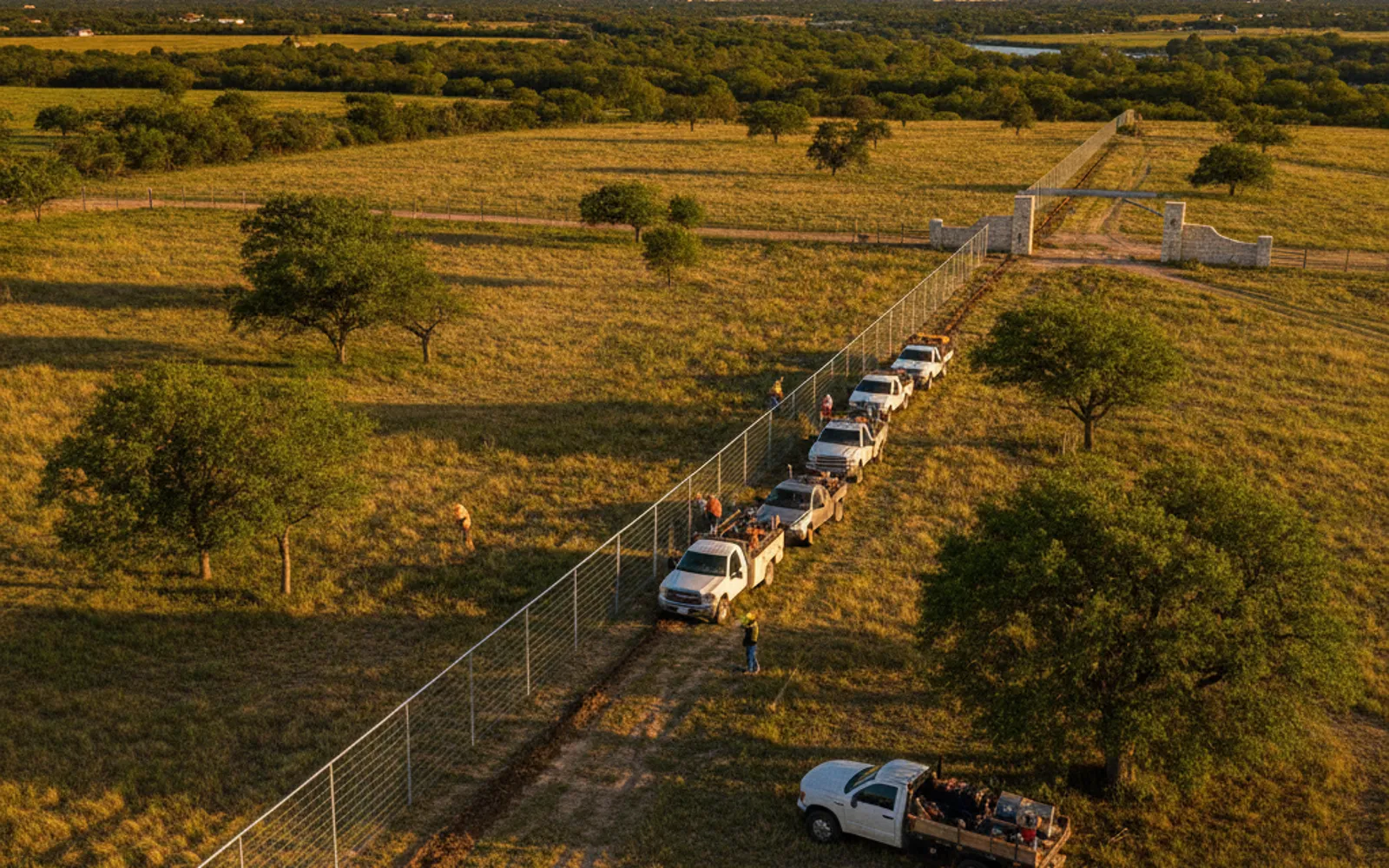
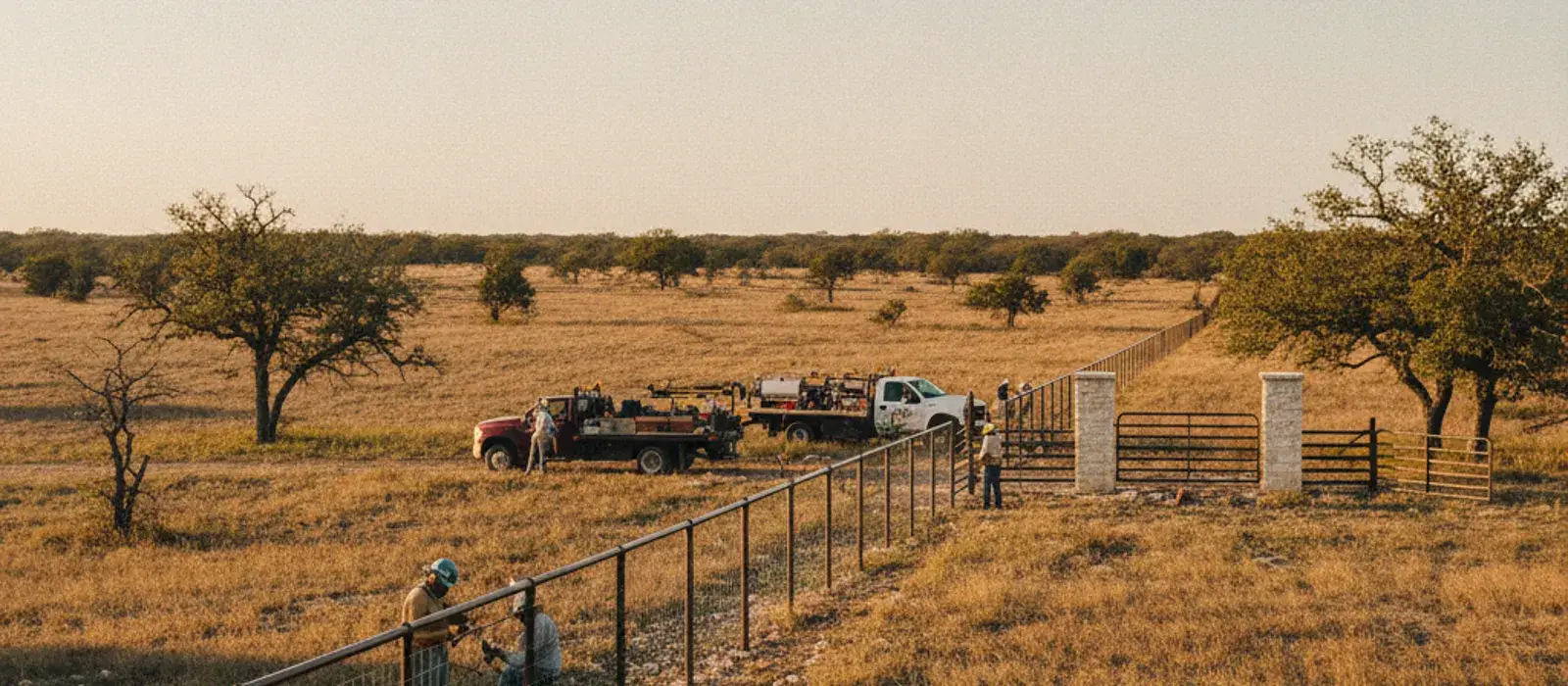
We build fence in this ground every week. This article covers what’s actually under your pasture, the methods that work in rock, what rock adds to the bill in real dollars, and the point where DIY stops making sense.
Why the Ground West of Waco Fights Back
Drive west out of Waco on Highway 84 or 6 and you’re climbing onto limestone country. The soils get shallower as you head toward Crawford, Valley Mills, and the Bosque County line. A lot of that ground is mapped as shallow, stony clay sitting right on top of limestone bedrock.
That’s not bad luck on your particular place. It’s the whole region. You can look up your exact tract for free on the USDA Web Soil Survey and see the mapped depth to rock before you ever rent a machine. Ten minutes on that site has saved plenty of our customers a wasted weekend.
The practical problem is simple. A fence post needs depth to hold. For a 5 foot barbed wire fence, we want wood posts about 3 feet in the ground, and corner posts deeper than that. When rock shows up at 10 inches, you can’t get that depth by digging harder. You either go through the rock, into the rock, or you build the fence a different way.
Here’s the part that surprises folks: rock isn’t all bad news. A post drilled and grouted into solid limestone holds better than a post in 4 feet of loose sand. The rock is only your enemy while you’re fighting it. Once the post is in, that same rock is the best anchor in Texas.
If you’d rather skip the fight entirely, we’ll come look at your ground and give you a free written estimate with the rock work priced line by line. Call us at (254) 870-8898 or request an estimate here.
How the Pros Set Fence Posts in Rocky Ground
There’s no single trick. There are four main methods, and on a typical half-mile job west of Waco we’ll usually use two or three of them on the same fence line.
1. Heavy rock auger on a skid steer. Our first move is a hydraulic auger with carbide rock teeth, running a lot more torque than anything at the rental yard. In fractured or layered limestone, which is most of what’s around Crawford and China Spring, this chews through. It’s slower than dirt digging, maybe 5 to 15 minutes a hole instead of 1, but the hole comes out clean and full depth.
2. Rock drill and pin. When we hit solid, unfractured rock, we switch to drilling a smaller diameter hole into the rock itself. For steel posts and pipe fence, we drill, set the post, and grout it in. A pipe post grouted 12 to 18 inches into solid limestone is about as permanent as fencing gets. This is standard practice on our pipe fence jobs in the western part of the county.
3. Breaker and hand work. Some holes need a hydraulic breaker or a gas-powered jackhammer to bust a ledge, then hand cleanup with a rock bar and spoon. Nobody enjoys it. It’s the right call when a shelf sits at 14 inches with decent digging under it.
4. Above-grade anchoring. On solid caprock where drilling every hole would blow the budget, there are legitimate workarounds: rock cribs at corners, driven pins with welded post plates, and letting the wire spans run longer between anchored posts. These need to be engineered right or the fence sags in a year, but done right they’re a smart money saver.
Which method wins depends on what the rock is doing at each hole, and that changes every 50 feet out here. That’s the honest reason experience matters more in rocky ground than anywhere else.
A quick story from Crawford
Last spring, Dale H. out past Crawford called us after two ruined weekends. He’d rented a two-man auger twice, $340 total in rental fees, burned up a set of teeth, and had 9 holes to show for a quarter mile of planned barbed wire fence. Rock at 8 to 12 inches the whole run.
We brought the skid steer with the rock auger and the drill. Full-depth holes where the rock was fractured, drilled and pinned posts across about 300 feet of solid shelf. The rock work added roughly $1,100 to what a same-length fence would cost in soft ground, and the whole quarter mile was done in three days. Dale’s words: “I spent $340 learning what y’all charge $1,100 to actually finish.”
What Rocky Ground Adds to Your Fence Cost
Straight answer: rock usually adds 20 to 50 percent to the post-setting portion of a fence job, and post setting is roughly a third of total cost on a wire fence. Here’s how the per-hole math typically shakes out in our area. These are ballpark 2026 numbers for planning, not a quote.
| Method | Best for | Typical cost per hole | Time per hole |
|---|---|---|---|
| Standard auger in soil | Normal dirt, no rock | $10 to $20 | 1 to 2 min |
| Skid steer rock auger | Fractured or layered limestone | $25 to $50 | 5 to 15 min |
| Breaker plus hand digging | Rock ledge over diggable soil | $40 to $80 | 20 to 45 min |
| Core drill, pin, and grout | Solid limestone shelf | $60 to $120 | 15 to 30 min |
| Gate or corner post drilled in rock | Entrances, H-braces | $150 to $300 each | 45 min plus |
On a real job, that means a quarter mile of 5-strand barbed wire that runs about $4,500 to $6,500 in friendly dirt might land between $5,500 and $8,500 in rock, depending on how much of the line sits on shelf. For the bigger picture on wire fence pricing, our barbed wire fence cost guide breaks down the full per-foot numbers.
Two things keep rock costs from getting away from you. First, an honest site walk before the quote. We probe the line, mark where the rock starts, and price it by section instead of slapping a blanket “rock fee” on the whole job. Second, smart post layout. Sometimes shifting a corner 20 feet puts it in a pocket of deep soil and saves a $250 drilled corner.
Valley Mills gate posts, done once
Marcy T. near Valley Mills had a contractor from out of the area set her entrance gate posts in 2024. They hit rock at a foot, shrugged, and set the posts shallow in concrete “mushrooms” sitting mostly above the rock. By late 2025 both posts leaned and her 16 foot gate dragged.
We pulled both posts, core drilled 18 inches into the limestone, grouted in heavier pipe, and rehung her gate. That fix ran $1,850. Drilling them into the rock correctly the first time would have cost her maybe $600 over a standard install. Shallow posts in rock country are the most expensive shortcut there is, and it’s the same failure we walk through in our post on leaning fence posts.
DIY Fence Posts in Rocky Ground: When to Push On and When to Quit
Plenty of our customers are handy, and if you’ve only got a handful of holes, doing it yourself can make sense. Here’s what actually works with tools you can rent or buy.
T-posts are your friend in shallow rock. A T-post only needs about 18 to 24 inches, and a heavy driver will seat one through caliche and fractured rock that stops an auger. If your line posts can be steel, you’ve solved most of the problem cheap.
Rent the rotary hammer, not just the auger. A big rotary hammer or gas breaker with a spade bit, about $90 to $130 a day, will break a thin ledge the auger can’t. Drill a ring of relief holes, then bust out the middle.
Try moving the hole first. Rock depth changes fast. Probing 2 feet either direction with a digging bar often finds a softer pocket. Your post spacing doesn’t have to be perfect to the inch, so use the soft spots the ground gives you.
Use dry-pack or gravel correctly. In a rock-bottomed hole that’s slightly shallow, tight-tamped crushed rock around the post holds better than a soupy concrete pour. Tamp in 3 inch lifts and check plumb every lift.
Now the quit signals. Stop and call a pro when: your corners and gate posts can’t reach at least 30 inches or solid rock anchorage, because everything else hangs off those; you’re facing more than 15 to 20 rock holes, where rental fees and your weekends pass our per-hole price fast; or you’re renting demolition-class tools you’ve never run. A 60 pound breaker kicking off a hidden ledge can break a wrist, and no fence is worth an ER visit. Same rule if the line crosses anywhere utilities might run: call 811 and wait for locates before any drilling.
One more from China Spring: a customer there spent $610 across three weekends of rentals fighting 14 holes before calling us. We drilled all 14 in one morning for $780. He told us he’d have paid double just for the Saturdays back.
If you’re staring down a long line of rock, get a free written estimate before you burn another weekend. Worst case, you’ll know exactly what the pro option costs and can make a real comparison.
Bracing and Post Choice When You Can’t Go Deep
Shallow ground changes what a strong fence looks like. Two rules carry most of the weight.
First, corners decide everything. In rock country we either drill corner posts into the limestone or build wider H-brace assemblies so the pull spreads across more anchor points. A wire fence is really just corners with wire stretched between them, and our H-brace corners guide shows why a shallow corner will slowly walk out of the ground under tension no matter how pretty the rest of the line looks.
Second, match the post to the anchorage. Grouted pipe beats wood where rock is solid, because you can drill a small hole for steel where a 10 inch wood-post hole is impractical. Where soil pockets allow full depth, treated wood line posts are still fine. Mixing post types along one line isn’t sloppy out here. It’s how a fence gets built to the ground it’s standing on, and Texas A&M AgriLife Extension’s fencing resources back up the same principle: design to your site, not to a catalog picture.
Get the corners anchored in rock, put steel where the shelf is solid and wood where the dirt is deep, and a fence west of Waco will outlast one built in soft ground. The rock that fought you going in is the thing holding it all together for the next 30 years.
Ready to fence rocky ground without the guesswork? Call Brazos Ridge Fence Co. at (254) 870-8898 for a free written estimate anywhere in McLennan, Bosque, or Falls County. We probe the line, price the rock honestly, and put it all in writing.
Frequently Asked Questions
How deep should fence posts be in rocky ground?
Aim for the same holding power, not the same number. In soil we want line posts around 30 to 36 inches and corners deeper. If solid rock stops you short, a post drilled and grouted 12 to 18 inches into limestone holds as well as or better than a full-depth post in dirt. What fails is the middle ground: a post sitting 12 inches deep in loose material on top of rock.
Can you drive T-posts into rock?
Into fractured limestone and caliche, usually yes, with a heavy manual or gas-powered driver. Into a solid unbroken shelf, no, and forcing it just bends the post. If a T-post refuses after a few solid hits, move it a couple feet and try again, or drill that spot instead.
Should I use concrete for fence posts in rocky ground?
Only where it does real work. Grout or concrete bonding a steel post into a drilled rock socket is excellent. A shallow blob of concrete poured on top of rock around a short post is the classic failure we get called to fix, because the whole mushroom tips as a unit. In partial-depth dirt holes, well-tamped crushed rock often beats concrete.
How much does rocky ground add to fence cost near Waco?
Plan on roughly 20 to 50 percent added to the post-setting portion of the job, which usually works out to $1 to $4 more per foot on barbed wire fence. Drilled gate and corner posts run $150 to $300 each. The spread depends on how much of your line sits on solid shelf versus fractured rock, which is why we probe before we quote.