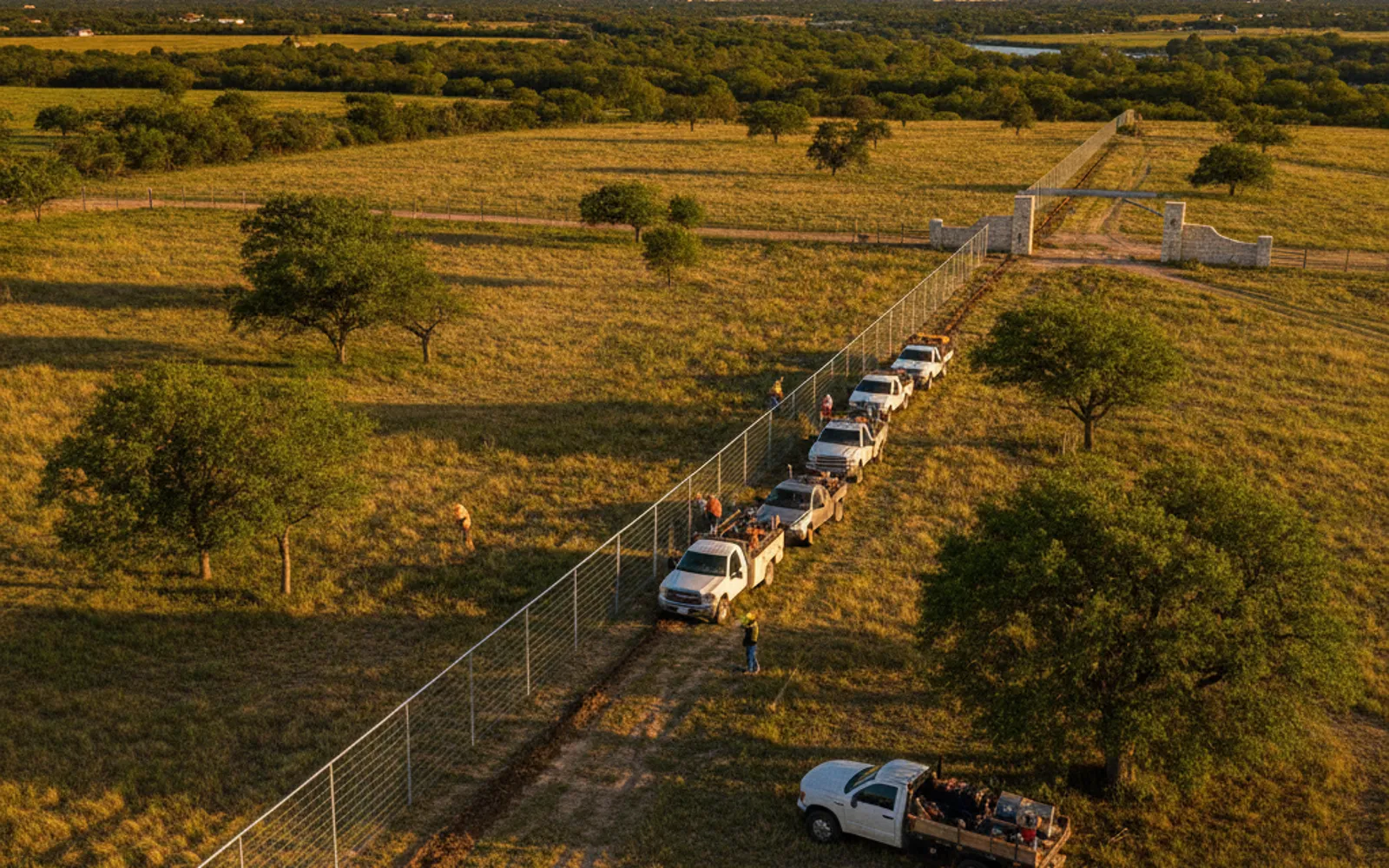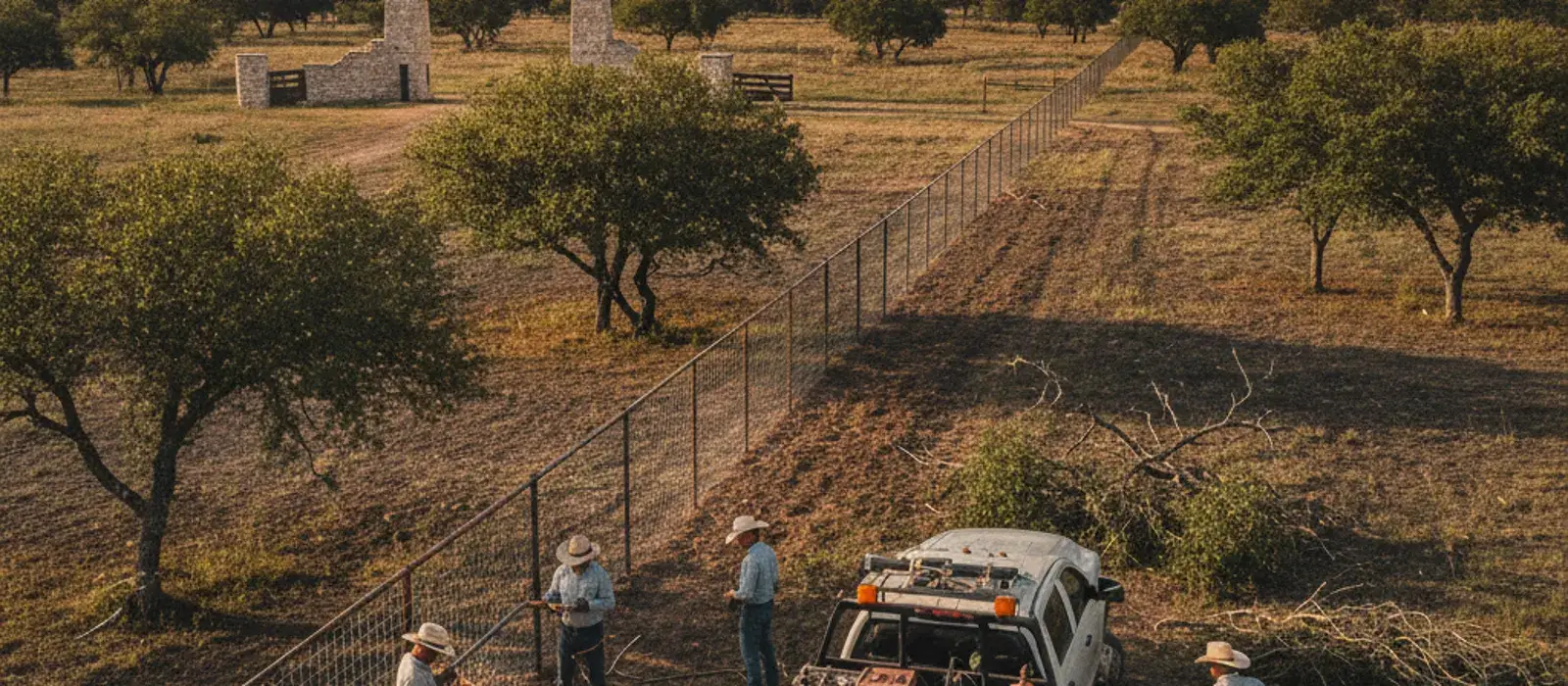
Here’s a number that surprises most landowners: on a brushy Central Texas place, clearing a fence line can run 30 to 50 percent of the whole fence budget. The wire and posts are the easy part. It’s the cedar, mesquite, and yaupon standing in the way that eat the money.
We build fence all over McLennan, Bosque, and Falls counties, and clearing a fence line the right way is where every good job starts. Do it wrong and you’ll fight regrowth, snapped wire, and neighbor disputes for the next twenty years. Do it right and your fence goes in faster, costs less per foot, and lasts a decade longer.
This guide covers what clearing actually costs around Waco, which trees to cut and which to leave, how wide to clear, and where your right-of-way ends and your neighbor’s land begins.
Why a Clean Fence Line Matters More Than the Wire
A fence is only as good as the ground it sits on. Brush against a fence does four things, and all of them cost you money.
First, limbs and trunks fall on wire. One dead cedar dropping across five strands of barbed wire can flatten 40 feet of fence in a single storm. Second, brush holds moisture against posts and wire, which speeds up rot and rust. Third, cattle use brush lines as scratching posts and shade, so they pressure the fence in exactly the spots you can’t see. Fourth, you can’t inspect or fix what you can’t reach.
There’s also the build itself. A fence crew working a clean, cleared line can stretch wire in long, straight pulls. A crew dodging trees has to short-pull, add extra braces, and hand-dig around roots. That labor shows up on your invoice whether you see the line item or not.
If your existing fence is already buried in brush and sagging, it might be past saving. A walk-through will help you decide, and if you want a second opinion, call us at (254) 870-8898. We’ll walk the line with you and give you a free written estimate, no pressure.
What It Costs to Clear a Fence Line in Central Texas
Cost depends on three things: how thick the brush is, how big the trees are, and what kind of equipment can reach the line. A smooth pasture edge with scattered mesquite is one price. A creek bottom choked with 20 years of cedar is another animal entirely.
Here’s what we see landowners paying around Waco in 2026:
| Brush condition | Typical method | Cost per foot | Cost per mile |
|---|---|---|---|
| Light grass and weeds, few saplings | Tractor and shredder | $0.25 to $0.75 | $1,300 to $4,000 |
| Moderate brush, mesquite under 4 inches | Skid steer with mulcher | $1 to $2.50 | $5,300 to $13,200 |
| Heavy cedar or mesquite, trunks 4 to 10 inches | Forestry mulcher or dozer | $2.50 to $5 | $13,200 to $26,400 |
| Old fence tangled in heavy brush | Dozer plus fence tear-out | $4 to $8 | $21,100 to $42,200 |
Two notes on that table. Stump grubbing costs more than mulching because you’re pulling roots, but mesquite will come right back if you only cut it at ground level. And if there’s an old fence buried in the brush, budget for tear-out too. Our fence removal cost guide breaks down what that part runs.
Roy Kolar, who runs cows on about 180 acres outside Crawford, learned the hard way. He had 2,600 feet of old net wire completely swallowed by cedar. He spent two weekends on it with a chainsaw and a 35 horsepower tractor, got maybe 400 feet done, and wore out a set of chains. He ended up paying a dozer operator $4,900 to clear and grub the full line in a day and a half. His words: “I should’ve written the check on day one.”
Brush and Trees: What to Cut and What to Leave
Not everything on the line needs to go. Here’s how we think about it, species by species, because Central Texas brush isn’t all the same.
Cut it all: Ashe juniper (cedar). Cedar is the number one fence killer in Bosque and western McLennan counties. It grows fast, it burns hot, and it drinks water your grass needs. Cut it flush and it won’t resprout from the stump, which makes it one of the easier species to kill. Don’t leave “just a few” along the line. They’ll seed the whole corridor.
Grub it, don’t just cut it: mesquite. Mesquite resprouts from buds below the soil line. Shred it or chainsaw it and you’ll have a thicker stand in three years. It needs to be grubbed out below the bud zone, or cut and treated with an approved herbicide on the fresh stump. Texas A&M AgriLife Extension publishes solid guidance on mechanical and chemical brush control for exactly these species.
Same story: yaupon and huisache. Both resprout aggressively. Mulching knocks them down but doesn’t kill them, so plan on follow-up spraying for two or three seasons.
Think twice: live oaks and pecans. A healthy mature oak 15 or 20 feet off the line isn’t hurting anything, and it’s worth real money in shade and land value. We’ll trim limbs back off the fence corridor and leave the tree. Never top a live oak in spring or summer without sealing the cuts, because oak wilt spreads through fresh wounds.
One more thing while the brush is coming out: look at what it was hiding. Around here that’s usually feral hog rooting along the low spots. If you find torn-up ground, read our piece on feral hog fence damage before you pick your wire, because hogs will dictate the fence design more than the cattle will.
Right-of-Way, Property Lines, and Your Neighbor
This is where clearing a fence line gets legal, and where a Saturday project can turn into a lawsuit. Three rules keep you out of trouble.
Rule one: know exactly where the line is before anything gets cut. Old fences in Texas wander. A fence built in 1962 might sit 8 or 10 feet inside your deeded line, or 8 feet onto your neighbor’s. If you clear a strip on land you don’t own, you can be liable for the value of every tree you took, and mature hardwoods appraise higher than most people expect. On any boundary fence where the line is in doubt, spend the $500 to $1,500 on a survey first. We cover the ownership side in fence on the property line in Texas.
Rule two: talk to your neighbor early, in person if you can. Most boundary fences in Texas are shared by handshake, and most neighbors will happily split clearing costs since a clean line benefits both sides. Get the agreement in writing, even if it’s two sentences in a text message. Who pays what, who keeps which trees, and where the new fence sits.
Rule three: call 811 before any grubbing or dozer work. Buried gas, water, and fiber lines cross rural fence lines more often than you’d think, especially near county roads. The call is free, the locate is free, and hitting a pipeline is neither. Along public roads, remember the county or TxDOT controls the road right-of-way, so don’t clear, push brush into, or burn inside that strip without checking first.
The Kubacek place north of West is the cautionary tale we tell. They cleared 1,400 feet of shared line and took out a row of cedar elms their neighbor considered his windbreak. No survey, no conversation first. The trees turned out to straddle the line. It took a surveyor, a lawyer letter, and about $3,200 in settled damages to smooth it over, more than the clearing itself cost. A 20 minute conversation would have prevented all of it.
Fence Line Clearing: DIY or Hire It Out?
Plenty of this work is landowner-friendly. Some of it isn’t. Here’s an honest split.
Good DIY work: shredding grass and light saplings with a tractor, chainsawing scattered cedar under 6 inches, hauling and stacking brush, spot-spraying regrowth, and trimming limbs you can reach from the ground. A rented walk-behind brush cutter runs about $250 a day around Waco and handles a lot of light clearing.
Hire it out: anything needing a dozer, excavator, or forestry mulcher, trees leaning over structures or existing fence, stump grubbing, and any tree work that puts a chainsaw above your shoulders. Chainsaw injuries send around 36,000 Americans to the emergency room every year, and storm-bent or fence-grown trees are the most unpredictable cuts there are. Wire that’s grown into a trunk can grab a chain and kick the bar back before you can react. The U.S. Forest Service and OSHA both publish chainsaw safety guidance worth reading before you ever pull a cord.
Dale Prosser in Valley Mills split it smart. He and his son shredded and chainsawed about half a mile of light stuff themselves over a few weekends, then paid $2,800 for a mulcher to eat the heavy cedar in the creek bottom they couldn’t safely touch. Total out of pocket was less than half what full-service clearing would have run, and nobody got hurt doing it.
The honest tiebreaker is time. If the brush is heavy enough that you’re measuring progress in feet per hour instead of feet per minute, machine work will beat your labor on cost alone. Tell us what you’re up against through our contact form and we’ll tell you straight which parts are worth doing yourself.
How Wide Should You Clear, and What Comes Next
For a standard barbed wire or net wire fence, we want a corridor 12 to 16 feet wide, centered on the fence line where possible. That gives equipment room to work on both sides, lets a truck drive the line for inspections, and keeps limbs off the wire for years instead of months. For a game fence, go wider, 16 to 20 feet, because you’re working 8 feet up and exotics will exploit any limb that overhangs the top.
Once it’s clear, don’t let it grow back. A cleared line you shred once a year stays cleared for almost nothing. A cleared line you ignore is a thicket again in five to seven years, and you’ll pay full clearing price twice in one fence’s lifetime. Put fence line shredding on the same calendar as your other upkeep, right alongside checking braces and tightening wire.
And think hard about timing. The best window for clearing in Central Texas is late summer through winter, when the ground is firm, snakes are slower, and you’re ahead of spring sap rise for stump treatments. Clearing in February and fencing in March is about the smoothest sequence there is.
That’s also the moment to price the whole project as one job. We quote clearing and fence construction together on most builds, which usually saves money because the equipment is already mobilized. Whether it’s barbed wire on a pasture line or pipe and cable at the headquarters, call (254) 870-8898 for a free written estimate that covers the clearing and the fence in one number. And if a storm drops timber on an existing fence and cattle are testing the gap, that same number is our 24/7 emergency line.
Frequently Asked Questions
How much does clearing a fence line cost per foot?
Around Waco, figure $0.25 to $0.75 per foot for light shredding, $1 to $2.50 for moderate brush with a mulcher, and $2.50 to $5 or more for heavy cedar and mesquite that needs a dozer. Old fence tangled in the brush adds tear-out cost on top. Get the clearing quoted with the fence build, since one mobilization usually beats two.
How wide should I clear for a new fence?
Clear 12 to 16 feet for a standard barbed wire or net wire fence, and 16 to 20 feet for a high game fence. That width gives equipment room during the build and lets you drive the line for inspections afterward. Narrower corridors work, but you’ll be back with a chainsaw sooner.
Can I clear brush right up to my neighbor’s side of the fence?
Not without permission. Your right to clear stops at the property line, and trees on or over the line are usually shared property under Texas law. Confirm the line with a survey if there’s any doubt, get your neighbor’s agreement in writing, and never cut a boundary tree without talking first.
Will mesquite and yaupon grow back after clearing?
Yes, unless you kill the root. Both species resprout from below ground, so shredding or mulching alone buys you two or three years at best. Grub the stumps out or treat fresh-cut stumps with an approved herbicide, then spot-spray regrowth for a couple of seasons. Cedar is the exception, since it dies when cut flush.