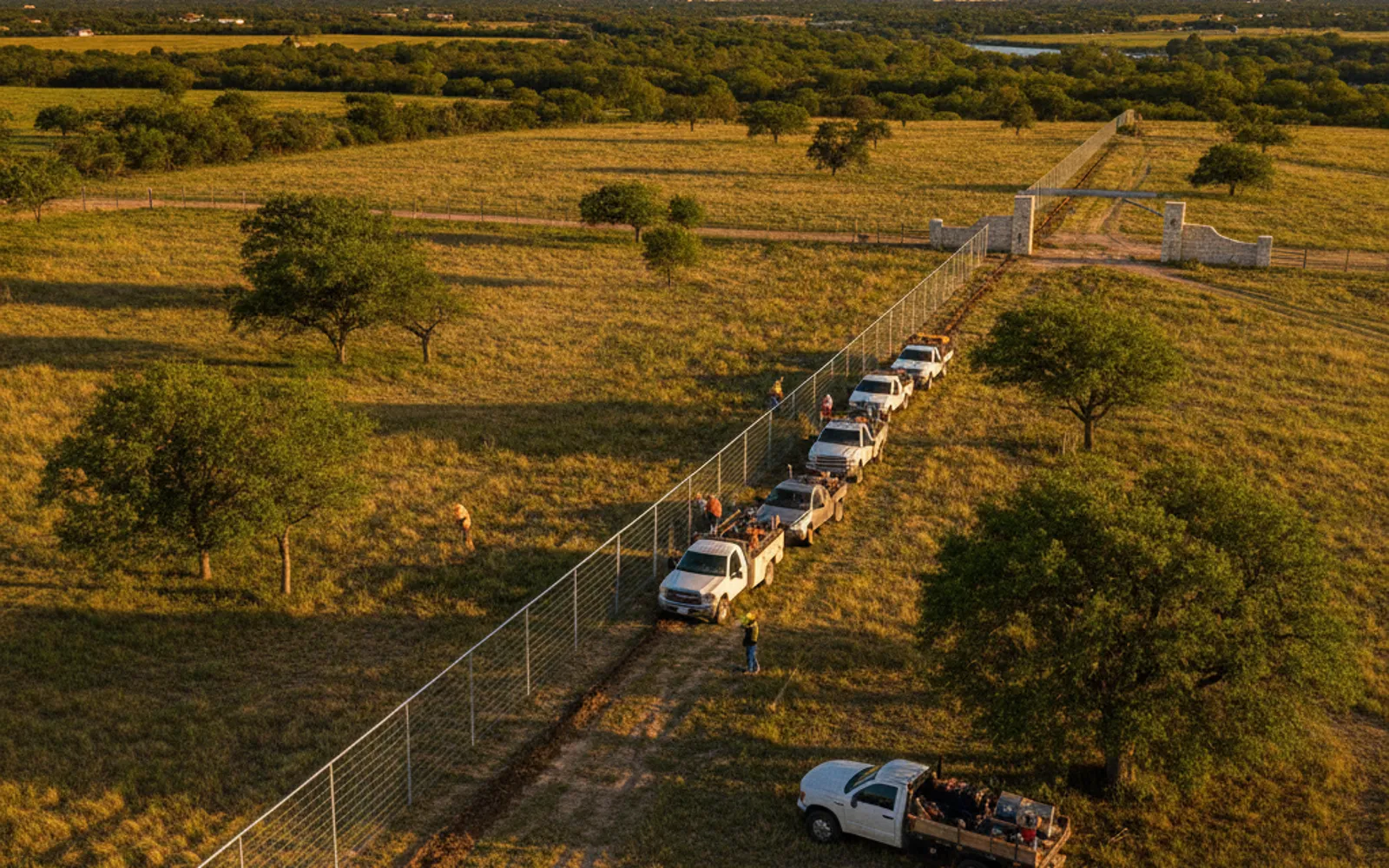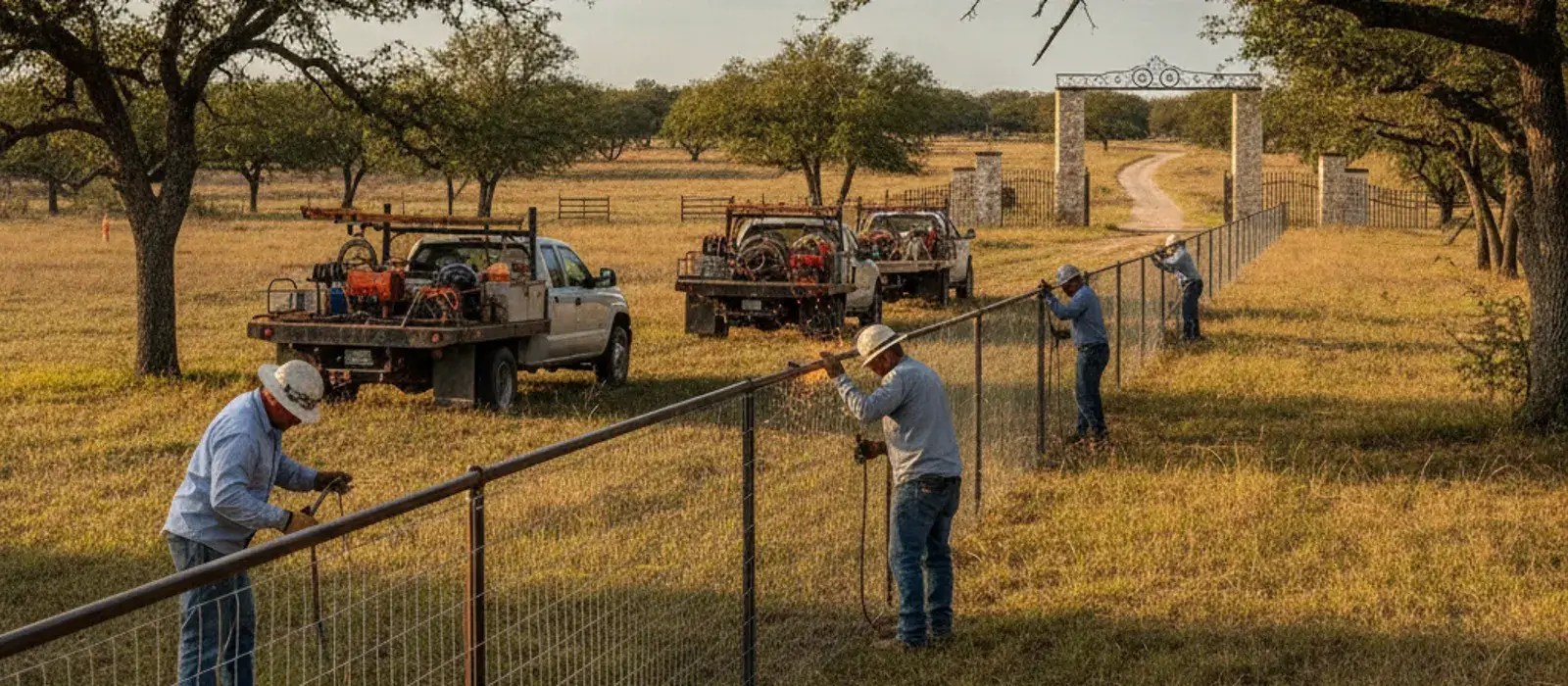
The same 25 acres outside Waco can carry a property tax bill of $4,500 a year, or right around $200. Same dirt, same view of the Brazos, same county. The difference is agricultural appraisal, what everybody around here calls the ag exemption, and whether you keep it often comes down to something as simple as your fence.
We build fence for a living, not tax law, but the ag exemption fence Texas question comes up on almost every estimate we run in McLennan, Bosque, and Falls counties. New landowners want to know if building a fence gets them the exemption. Folks who already have it want to know if a sagging fence can lose it. And nearly everybody wants to know if their fencing materials can be bought tax free.
So let’s walk through what counts, what doesn’t, and what it actually costs to get your place fenced to a standard the appraisal district takes seriously. And if you’d rather just talk it through with somebody who builds this stuff every day, call us at (254) 870-8898. The conversation’s free.
What the Texas Ag Exemption Actually Is (and Isn’t)
First, a quick correction that matters. There’s no such thing as a true ag “exemption” on property taxes in Texas. What you’re really after is open-space agricultural appraisal, usually called 1-d-1 appraisal, under the Texas Property Tax Code.
Here’s the plain-English version. Instead of taxing your land on market value, the county appraisal district taxes it on productivity value, meaning what the land earns as grazing or crop land. Market value on small acreage near Waco might run $12,000 to $20,000 an acre. Productivity value on native pasture might be $100 to $200 an acre. That’s why the tax savings are so dramatic.
To qualify, your land generally has to be used for agriculture to the degree of intensity typical for your area, and it has to have that history. In most cases the land needs ag use in five of the past seven years. Your county appraisal district sets the local standards, so McLennan CAD’s expectations can differ from Bosque or Falls.
The full rules live with the Texas Comptroller, and their agricultural and timber page is worth a read before you make any big decisions. Texas A&M AgriLife Extension also publishes solid, free guidance on stocking rates and land management at agrilifeextension.tamu.edu.
Where does fencing fit? That’s the part most people get wrong, in both directions.
Does Your Fence Count Toward a Texas Ag Exemption?
Here’s the honest answer: a fence by itself does not qualify land for ag appraisal. You can build the prettiest pipe fence in Central Texas around 20 acres of mowed grass, and if there’s no livestock, no hay operation, no bona fide ag use, the appraisal district owes you nothing.
But flip it around and fencing becomes critical. If your ag use is grazing cattle, sheep, or goats, you cannot demonstrate a real livestock operation without a fence that actually holds livestock. Appraisal districts look at what they call degree of intensity, and for grazing operations that checklist almost always includes:
- Perimeter fencing adequate to contain the class of livestock you run
- Stocking at a rate typical for the county, often in the range of one animal unit per 5 to 15 acres depending on the land
- Working water, and some evidence of management like shredding, feeding, or rotation
So the fence isn’t the qualification. The fence is the proof. A field inspector who finds three strands of rusted wire laying in the weeds, no cattle in sight, has an easy call to make. A tight five-strand barbed wire perimeter with cows behind it tells the whole story in one glance.
If you’re starting from bare land, get your grazing plan and your fence plan moving together. We give free written estimates, and we can usually tell you within a day what a perimeter will cost. Call us at (254) 870-8898 or request an estimate here and we’ll walk the line with you.
One more wrinkle worth knowing. If you’re headed toward a wildlife management exemption, the land must already have ag appraisal first, and high fencing often enters the picture. Our game fence installation crews handle that conversion regularly, and the rules on height and design are stricter than most folks expect.
The Sales Tax Side: Buying Ag Exempt Fencing Materials in Texas
Here’s where fence and taxes connect in a way that puts real money back in your pocket. Texas charges up to 8.25 percent sales tax. But if you hold an Ag/Timber Number from the Texas Comptroller, fencing materials used exclusively on a farm or ranch to produce agricultural products for sale are exempt from sales tax.
That covers the stuff a working fence is made of. Wire, T-posts, wood posts, pipe, gates, stays, clips, corner brace materials. On a big job, the savings are not pocket change.
A few things trip people up:
- You need the number first. The Ag/Timber Number is free from the Comptroller, and you can apply online. Without it, you pay tax like anybody else.
- The use has to be agricultural production. Fencing your yard, your driveway, or a weekend place with no ag operation doesn’t qualify, even if the land has ag appraisal.
- How your contractor writes the contract matters. Tax treatment can differ between lump-sum and separated contracts. Tell your fence contractor up front that you have an Ag/Timber Number so the paperwork gets done right from day one.
The property tax appraisal and the sales tax exemption are two separate programs. Plenty of landowners have one and not the other. If you run livestock for sale, there’s rarely a good reason not to have both.
Real Numbers: What Ag-Ready Fencing Costs Around Waco
Talk is cheap, fence isn’t. Here’s what we’re actually seeing on jobs across McLennan, Bosque, and Falls counties in 2026, priced per foot and per mile so you can run your own math. A mile is 5,280 feet, and a square 10 acres needs about 2,640 feet of perimeter.
| Fence type | Typical cost per foot | Cost per mile | Where it fits an ag operation |
|---|---|---|---|
| 5-strand barbed wire | $2.50 to $4.50 | $13,200 to $23,800 | Cattle perimeter, the CAD standard for grazing |
| Net wire (field fence) | $3.50 to $6.00 | $18,500 to $31,700 | Sheep, goats, mixed stock |
| Electric cross-fence | $1.50 to $3.00 | $7,900 to $15,800 | Rotational grazing inside a hard perimeter |
| High game fence | $8.00 to $14.00 | $42,200 to $73,900 | Wildlife management, exotics |
| Pipe fence | $10.00 to $20.00 | $52,800 to $105,600 | Road frontage, pens, entrances |
Rocky ground, heavy brush along the line, and lots of corners push you toward the high end. For a deeper breakdown, see our guides on barbed wire fence cost and the full cost to fence 10 acres.
Two real-world examples from our own books this spring.
Lorena. Dale M. bought 18 acres off Old Lorena Road, bare except for a falling-down single wire on two sides. He wanted ag appraisal within the qualifying window, so he needed a cattle-tight perimeter before he could stock it. We built 3,400 feet of 5-strand barbed wire with cedar corners and one 16-foot gate for $11,900. With his Ag/Timber Number, the materials portion came in about $460 lighter than it would have with sales tax. He’s running six pairs on it now and his paperwork is in at McLennan CAD.
Valley Mills. The Kubacak place had held ag appraisal for decades, but after the owner passed, the fences went four or five years without attention. When the family leased the grass out, the tenant’s cattle walked through the west line twice in a month. That’s not just an exemption problem, that’s a liability problem, and our article on Texas open range law explains why. We replaced 2,100 feet of the worst wire and rebuilt six H-braces for $7,300, and the lease, the cattle, and the ag valuation all stayed intact.
Mistakes That Cost Landowners Their Ag Valuation
We’ve seen each of these happen to real people in our service area. Learn from them for free.
Building the fence and stopping there. A fence with no livestock and no ag activity behind it is just an expensive property line. The appraisal district needs to see actual use, year after year.
Letting the fence fail while the cattle stay. If the herd spends more time on the county road than your pasture, you’ve got trouble stacked on trouble. Escaped cattle are a wreck risk, and a chronically open perimeter undercuts your claim of a managed operation. If your cows are already testing weak spots, fix the fence before the appraisal district or a passing driver finds the gap for you.
Losing the history when buying land. Ag appraisal doesn’t automatically ride along with a sale. If you buy a place and let the use lapse, requalifying takes years. Walk the fences before you close, and keep stock on the place from day one if you can.
Ignoring rollback taxes. Take land out of ag use, maybe to subdivide or build, and the county can claw back the tax difference for the previous three years plus interest. On land near town, that bill can land in five figures per acre. Know the number before you change the use.
Cheaping out on corners. A CAD inspector may never look at your braces, but your cattle will. Corners and braces are where fence integrity lives, and rebuilding them later costs more than doing them right the first time.
Here’s a good rule for when to stop patching and call a professional: if more than a quarter of a line needs work, if braces are leaning, or if you’re fencing along a road where an escape could hurt somebody, get a pro involved. Wire under tension can hurt you badly, and a fence that fails at the wrong time can cost far more than the repair ever would.
Getting Your Place Fenced Right, With the Paperwork to Match
If you’re working toward ag appraisal, protecting one you already have, or converting to wildlife management, the order of operations matters. Talk to your county appraisal district about local degree of intensity standards. Get your Ag/Timber Number from the Comptroller before materials get ordered. Then build a perimeter that holds your livestock in dry years and wet ones.
That’s where we come in. Brazos Ridge Fence Co. builds barbed wire fence, net wire, pipe, and game fence across Waco and Central Texas, from China Spring to West to McGregor. We’re licensed and insured, our estimates are free and in writing, and we’re used to handling the Ag/Timber paperwork on the materials side.
Call (254) 870-8898 or reach us through the contact form and tell us what you’re running, or planning to run. We’ll give you honest per-foot numbers and a fence the appraisal district, and your cattle, will respect. And if a storm or a wreck takes a fence down with stock inside, our emergency line answers 24/7.
Frequently Asked Questions
Does building a fence qualify my land for an ag exemption in Texas?
No. A fence alone doesn’t qualify anything. Ag appraisal is based on actual agricultural use, like grazing or hay production, at the intensity typical for your county, usually for five of the past seven years. The fence is evidence that supports a grazing operation, not a substitute for one.
Are fencing materials really tax free with an ag exemption?
They can be, but it’s a separate program from your property tax appraisal. You need an Ag/Timber Number from the Texas Comptroller, and the fence has to be used on a farm or ranch producing agricultural products for sale. With the number, wire, posts, pipe, gates, and brace materials can be purchased free of sales tax.
Will replacing my old fence trigger a rollback or reappraisal?
Replacing or upgrading a fence doesn’t trigger rollback taxes. Rollbacks happen when land changes from ag use to non-ag use, like development, and they reach back three years plus interest. A better fence that keeps livestock where they belong actually strengthens your position with the appraisal district.
How good does my fence have to be for the appraisal district?
Good enough to genuinely contain the livestock you claim to be raising. For cattle in Central Texas, that usually means a sound 4 or 5-strand barbed wire perimeter or equivalent, with solid corners and gates that close. Districts don’t grade on looks, but a fence that obviously can’t hold stock invites hard questions during a field review.