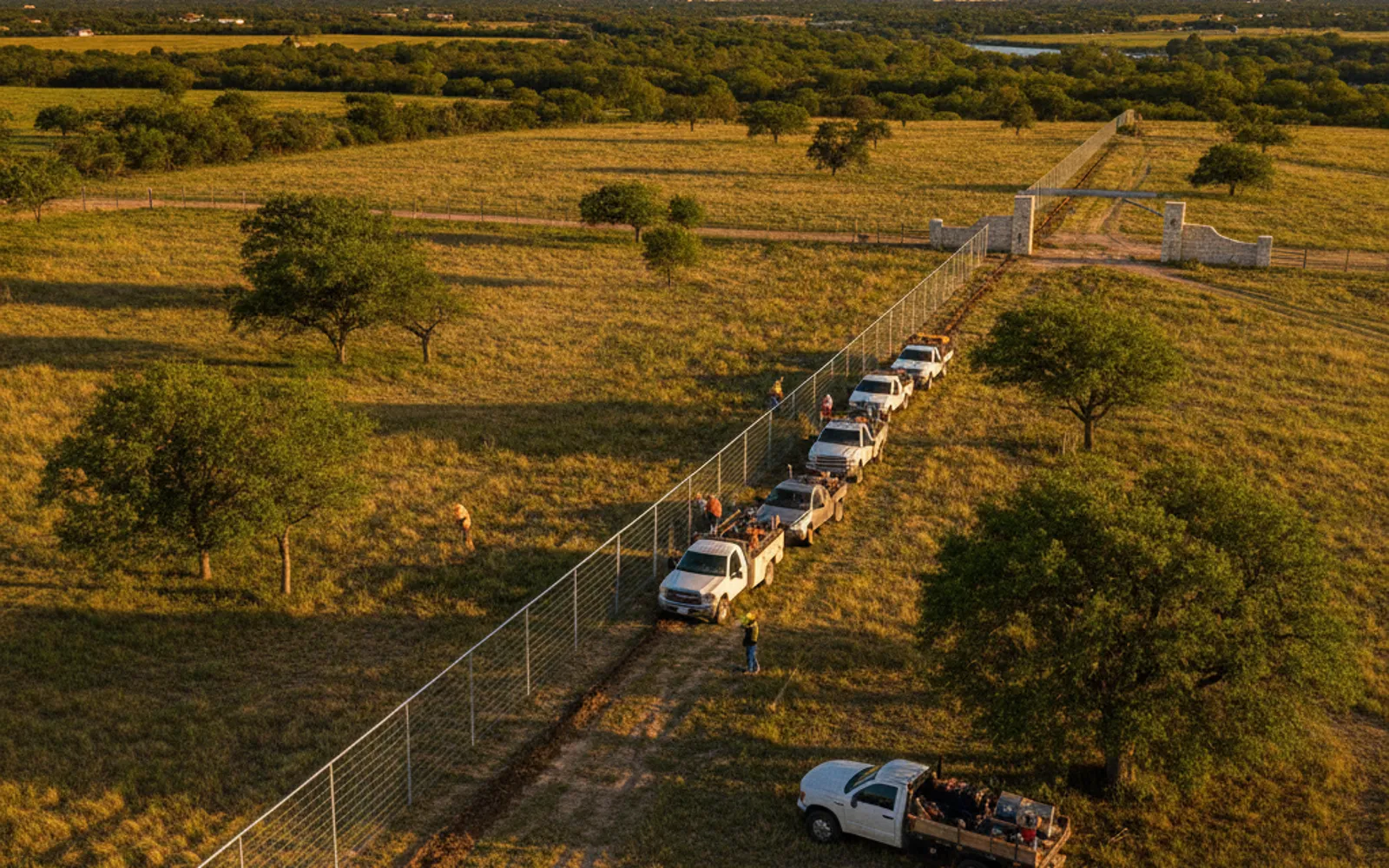
A horse can hit a barbed wire fence at 2 a.m. and hand you a $4,000 vet bill by sunrise. We’ve seen it happen more times than we’d like around Waco, and almost every time the fence was built for cattle, not horses.
Here’s the short version: the best fence for horses is one a horse can see, can’t get a hoof through, and won’t cut when the horse panics. Barbed wire fails all three tests. It’s a fine cattle fence, and we install miles of it every year, but a horse is a different animal with a different brain and much thinner skin.
In this guide we’ll walk through why barbed wire and horses don’t mix, which fences actually work for horses in McLennan, Bosque, and Falls counties, and what each one costs per foot installed. Real numbers, no fluff.
If you’ve already got horses standing behind old barbed wire and you’re worried about it, don’t wait on an article. Call us at (254) 870-8898 and we’ll come look at it. Estimates are free and in writing.
Why Barbed Wire Hurts Horses (When It Works Fine for Cattle)
Cattle are thick-hided and slow to panic. When a cow leans into barbed wire, the barbs poke, the cow backs off, and everybody goes on with their day. That’s the whole design.
Horses are prey animals with a hair trigger. When something spooks a horse, it doesn’t back up. It runs, and it doesn’t always look where it’s going. A horse that hits barbed wire at speed doesn’t bounce off. The wire wraps, the horse fights it, and the barbs do exactly what barbs do.
There’s a second problem: visibility. Four or five strands of thin wire are nearly invisible to a horse at dusk or in a storm. Horses run through barbed wire fences they simply never saw. University extension programs have said this plainly for decades. Penn State Extension lists barbed wire as unacceptable for horses in its fence planning guide for horses, and the University of Minnesota Extension says the same.
The third problem is legs. Horses paw at fences and reach through them for grass. Barbed wire and loose hinge-joint field fence both let a hoof slip through, and a trapped leg plus a panicking horse is how you get a career-ending injury on an animal you paid five figures for.
One call sticks with us. A gentleman named Doyle out toward Crawford had a nice roping gelding get a front leg through a sagging 1950s barbed wire fence during a thunderstorm. The vet saved the leg, but the bill came to $3,800 and the horse was out of work for eight months. We tore out that quarter mile of old wire and replaced it with no-climb net wire and a top rail for about $9,600. He’ll tell you himself the new fence was cheaper than the wreck.
What the Best Horse Fence Has to Get Right
Before we rank fence types, here’s the checklist we use when we design a horse fence anywhere in Central Texas. A good horse fence needs five things.
Visibility. The horse has to see the barrier from a dead run. That’s why a top rail, a wide tape, or a solid pipe rail matters so much. Thin smooth wire alone is almost as invisible as barbed wire.
No gaps a hoof fits through. Mesh openings should be 2 inches by 4 inches or smaller. That’s the whole point of no-climb woven wire. A hoof physically can’t pass through it.
Smooth surfaces. No barbs, no sharp wire ends, no protruding bolt heads, no T-post tops without caps. Anything that can cut, will cut, because horses find trouble like it’s their job.
Height and strength. For most horses, 54 to 60 inches at the top. The fence has to take a 1,100 pound animal leaning, scratching, or hitting it without folding.
Honest corners and gates. Horses test gates and corners more than any stretch of line fence. That means real H-brace corners and gates hung on posts set in concrete, not a panel wired to a T-post.
If your current fence fails two or more of those, it’s worth a conversation. You can request a free written estimate here and we’ll walk the line with you.
The Best Fence for Horses, Ranked for Central Texas
Here’s how the main horse fencing options stack up on our jobs around Waco, from our top pick down.
1. No-climb net wire with a top rail (best value)
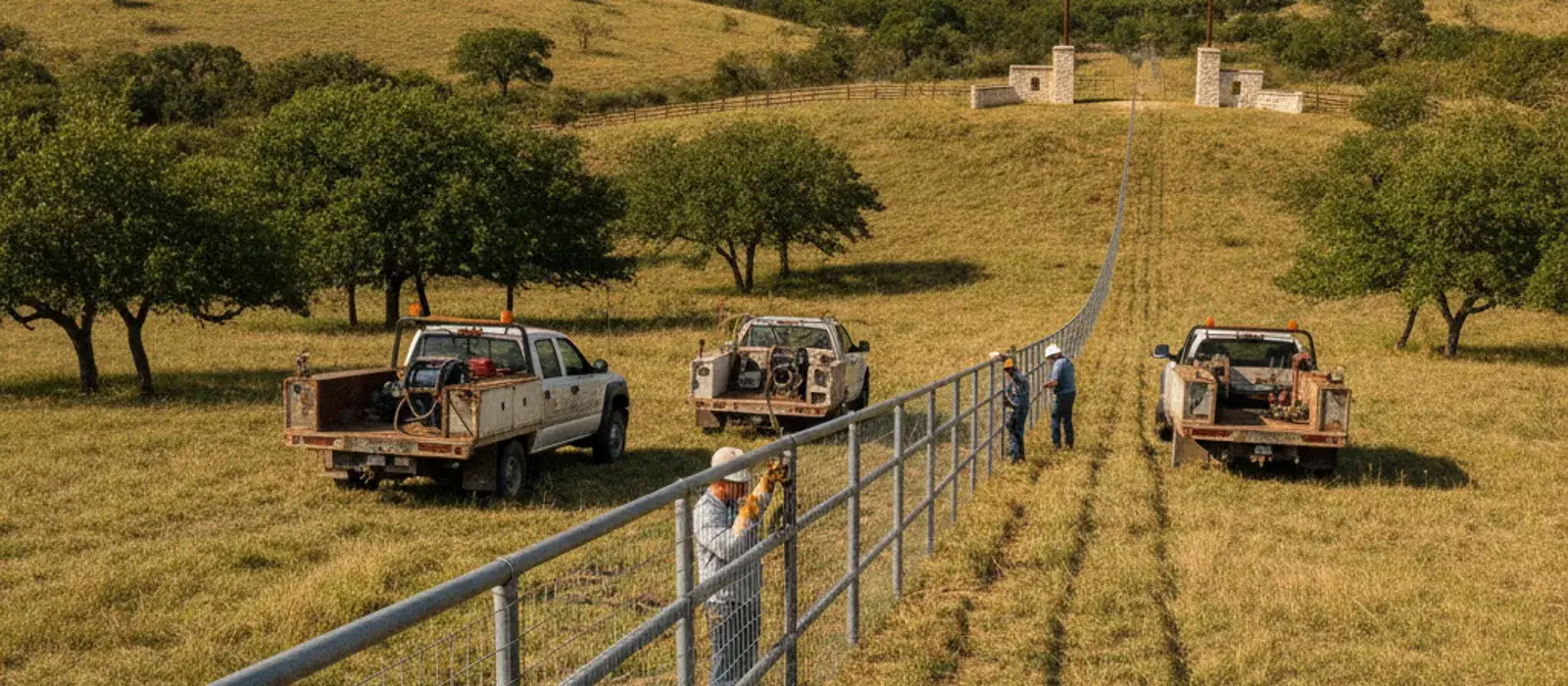
This is what we recommend for most horse owners: 2x4 inch woven “no-climb” horse mesh, 48 to 60 inches tall, with a wood or pipe top rail so the fence is visible and the mesh can’t get mashed down. Hooves can’t get through it, there’s nothing sharp on it, and good class 3 galvanized mesh lasts 20 to 25 years in our climate.
Installed on wood posts with a top rail, you’re usually looking at $9 to $14 per foot depending on terrain and brush. It’s not cheap, but it’s the best safety per dollar in horse fencing. If you’re weighing mesh types, our barbed wire vs net wire breakdown covers the details.
2. Pipe fence (safest and toughest)
Welded steel pipe fence is the gold standard for pens, arenas, stallion runs, and anywhere horses get crowded or worked. It’s highly visible, it doesn’t give, and a horse that hits it slides off instead of tangling in it. With decent paint or bare weathering steel, a pipe fence will outlast the person who built it.
The tradeoff is price. Figure $28 to $45 per foot installed depending on pipe size and rail count, which is why most folks run pipe around pens and the horse trap, then no-climb on the pasture perimeter. Full numbers are in our pipe fence cost guide.
One note for open pasture: some owners add a single electric strand inside a pipe fence, because a spooked horse can still hit rigid steel hard. Pipe won’t cut, but it doesn’t flex either.
3. Wood board fence (classic looks, real upkeep)
Three or four rail wood board fence is beautiful and very visible. It’s a fine horse fence when it’s maintained. The problem in Central Texas is sun, moisture swings, and horses that chew. Boards crack, nails back out, and a broken board turns into a spear.
Expect $12 to $20 per foot installed, plus paint or stain every few years and board replacement forever. Most of our clients who want the look run board fence along the road frontage and entrance, then switch to no-climb out back.
4. Electric tape or braid (good helper, thin main fence)
Wide electric tape is visible, cheap at $3 to $6 per foot, and horses respect a hot fence once they’ve met it. It’s great for cross-fencing, rotating pasture, and as a standoff strand that keeps horses off a permanent fence.
As the only barrier on a perimeter, we don’t love it. Power fails, chargers die, and a truly panicked horse will blow through tape. A lady named Marisol near China Spring fenced a 3-acre paddock with tape alone for about $2,100. It worked for a year, right up until a neighbor’s dogs ran her mare through it and out onto the county road. Nobody got hurt, and we replaced it with no-climb and a top rail. If you run hot fence anywhere, test it weekly, because a dead charger turns it into string.
What to avoid entirely
Barbed wire, loose hinge-joint field fence with big openings, and anything built on uncapped T-posts. If you’re stuck with T-posts for now, cap every one of them today. It costs pennies per post and it has saved more than one horse’s chest.
Horse Fence Cost Comparison for the Waco Area
Here’s what these fences typically run installed on our jobs in McLennan, Bosque, and Falls counties. Rocky ground, heavy brush, and long material hauls move these numbers, so treat them as honest ranges, not quotes.
| Fence type | Installed cost per foot | Horse safety | Typical lifespan |
|---|---|---|---|
| Electric tape or braid | $3 to $6 | Fair as backup, weak as sole fence | 10 to 15 years |
| Barbed wire (cattle only) | $2.50 to $5.50 | Poor, not recommended for horses | 25 to 30 years |
| Field fence (hinge joint) | $4 to $7 | Marginal, hoof traps in large mesh | 15 to 20 years |
| No-climb net wire + top rail | $9 to $14 | Very good | 20 to 25 years |
| Wood board (3 to 4 rail) | $12 to $20 | Good with upkeep | 15 to 20 years |
| Steel pipe fence | $28 to $45 | Excellent | 40+ years |
For a rough project total, a square 5-acre paddock has about 1,870 feet of perimeter. At $11 per foot for no-climb with a top rail, that’s around $20,600 before gates. Our ranch fence cost guide shows how acreage, shape, and terrain change the math.
Down in Lorena, the Kowalski family did exactly that split last spring: pipe around a 200 by 300 foot pen and alley for right at $31,000, and no-climb with a pipe top rail around the rest of the horse pasture at $11.50 a foot. Total project came in near $52,000, and their insurance agent liked it almost as much as their horses do.
Height, Post Spacing, and the Details That Keep Horses In
A few build details matter more with horses than with cattle, and this is where a lot of DIY horse fences go wrong.
Height. Run the top of the fence 54 to 60 inches for riding horses, and taller for stallions or known jumpers. A 48-inch cattle fence invites a tall horse to lean over it until it sags.
Post spacing. We set wood posts 8 to 10 feet apart on horse mesh, tighter than a typical cattle fence, because horses lean and rub hard. Rocky or rolling ground can tighten that spacing further.
Bottom gap. Leave a few inches at the bottom so a pawing horse doesn’t wedge a hoof under the mesh, but not so much that a foal can roll under it.
Gates. Use smooth-sided horse gates, not stock panels with exposed cut ends. Hang them on 3 to 4 inch pipe posts set in concrete, and latch them with hardware a clever horse can’t flip open. You’d be amazed what a bored gelding can do with his lips.
Corners. Every fence pull needs a real brace. Skimp on corners and the whole fence loosens in two summers of Texas heat, and a loose horse fence is halfway to being a dangerous one.
When to DIY and When to Call a Pro
Plenty of horse owners can stretch a run of tape fence, cap their T-posts, or swap a broken board. That’s normal ranch upkeep, and we’ll cheer you on.
Stop and call a professional when the job involves tearing out old barbed wire, stretching woven mesh, welding pipe, or setting gate and corner posts. Old barbed wire under tension can snap back and cut you badly, and rolled-up wire left in the grass will find a horse’s leg years later. Stretching net wire without the right equipment gives you a baggy fence that fails the one night it matters. And nobody should be learning to weld on the fence that holds their horses.
The other time to call is right now, tonight, if a horse is already out or tangled. We run a 24/7 emergency line for exactly that.
Ready to get real numbers for your place? Call (254) 870-8898 or request your free written estimate. We’re licensed and insured, we build horse fence all over Central Texas, and we’ll give you a per-foot price in writing before we drive a single post.
Frequently Asked Questions
What is the safest fence for horses?
Steel pipe fence is the safest all-around horse fence, which is why it’s standard for pens and arenas. For pasture perimeters, no-climb woven wire with a visible top rail delivers nearly the same safety at a fraction of the price. Both keep hooves out of the fence and have nothing sharp for a horse to hit.
Can horses ever be kept behind barbed wire?
Some ranch horses live behind barbed wire without incident, but it only takes one spook to end that streak. If replacing it all at once isn’t in the budget, add a visible hot tape offset inside the wire and replace the worst stretches first. We’d rather help you phase it out than treat it as acceptable.
How tall should a horse fence be?
Plan on 54 to 60 inches at the top rail for most riding horses. Go 60 inches or more for stallions, tall warmbloods, or any horse with a jumping habit. Ponies and minis need shorter mesh openings more than they need extra height.
How much does horse fencing cost per foot in the Waco area?
Around Waco, no-climb net wire with a top rail typically runs $12 to $16 per foot installed, wood board runs $12 to $20, and pipe fence runs $18 to $28. Electric tape cross-fencing runs $3 to $6 per foot. Rock, brush, and gate count move every one of those numbers, so get a written per-foot quote before you commit.